Woensdag 17 April 2013

The Ostoure super-naked motorcycle design concept


The Ostoure super-naked motorcycle concept is Iranian designer Mohammad Reza Shojaie's take on the street muscle bike of the future. The concept draws inspiration from ancient Persian engravings, combining these with cutting-edge design elements and some high-tech trimmings such as two-wheel drive and an in-helmet heads-up display.

Ostoure means “legend” in Persian, and Shojaie says the bike’s design was inspired by the stone engravings of ancient Persepolis. Combining a muscular look with more delicate detailing, the Ostoure has an aggressive but refined appearance that would not be out of place on the boulevards of the near future.
The concept bike, which exists only as renderings at this point, features two-wheel drive with apparent shaft drive and dual differentials. Although it’s not clear from the renderings, Shojaie says steering is through the front wheel linkage, implying some type of hub steering. You steer the bike using the two handgrips located on either side of the fairing. The designer claims this nonstandard arrangement would be similar to piloting an aircraft.


The Ostoure has a single shock suspension on both the rear and front. Because of the front shock’s location, the bike uses a smaller front radiator, supported by smaller radiators located on each side.
Instrumentation is available both on board the bike, as well as through the helmet using a heads-up display (HUD). The Ostoure helmet is rather trick in itself. In addition to the HUD, the lid features a Bluetooth connection to the bike, built-in speakers, and even air-conditioning. The helmet’s controls are located on the bikes handgrip.


Although the Ostoure concept bike features some innovative tech, many of the concepts have been around motorcycles for years. Hub steering was used as far back as the 1920s, and has been seen more recently in Bimota, Tier Motorsports, and Vyrus. Helmet HUDs are currently available for motorcycles from OEMs and after-market providers. Shaft drive is not uncommon, and there are even a few two-wheel drive bikes from Yamaha, BMW, KTM and others.


With it’s eye-catching styling and just-over-the-horizon technology, the Ostoure concept has been generating a lot of buzz. In fact, Shojaie says his design earned him a scholarship to the Istituto Europeo di Design in Italy, so we can look forward to more great work from this promising designer.

Source: gizmag.com @By Alan Brandon


Maandag 15 April 2013

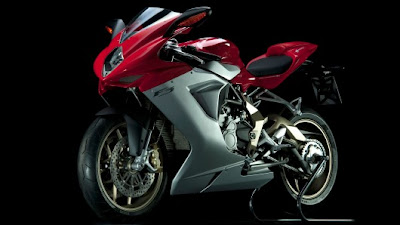
MV Agusta 675cc F3 oozes technology, style, class, power and heritage


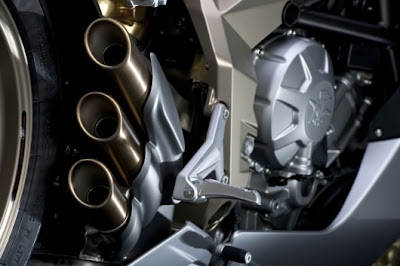
The star of the 2010 EICMA motorcycle show held in Milan this week was undoubtedly the new MV Agusta F3. Though many of the specifics of the new three cylinder 675cc F3 have not been revealed, MV claims it has the smallest motor and the most horsepower (138 bhp) of any middleweight bar the Ducati 848 V-twin. The engine uses a counter-rotating crankshaft (claimed to partially balance the gyroscopic effects of the wheels to make a more nimble machine), and comes with ride-by-wire, traction control and multiple engine power maps – all firsts in the class.

Though the bike might be a bit short on detail, what is clear is that the MV Agusta name remains at the extreme end of capability and it's heart-warming to see it still at the forefront of motorcycle engineering.
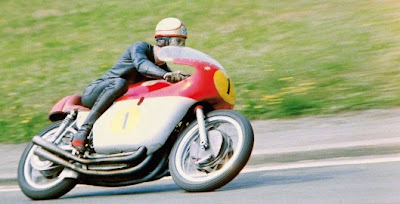
MV Agusta was once the best known motorcycle brand in the world, and the pride of Italy. It was the motorcycle upon which Giacomo Agostini, John Surtees, Mike Hailwood, Phil Read et al won 17 world MotoGP (then 500cc) riders championships.


In the previous four-stroke era of motorcycle racing, MV Agusta was simply unbeatable - it won 17 consecutive MotoGP (500cc) titles before the two-stroke engine came along, rendering all four-stroke machinery uncompetitive. Its percentage of race starts versus race wins will never be surpassed. Ducati is often likened to being the Ferrari of motorcycles, but MV Agusta has a heritage far more akin to that of the Maranello brand.
In terms of the number of MotoGP riders titles, MV Agusta ceased competing at the end of 1976 yet still has more championship wins (18) than either Honda or Yamaha which have 14 titles apeice. Hence simply hearing the sound of


The frame is similar to its larger brethren in being a mixture of steel tubing lattice and aluminum side plates. It also has a single-sided swingarm with adjustable Sachs suspension unit, while the front forks are adjustable upside down Marzocchis. The brakes employ a Nissin master cylinder and Brembo radial calipers and discs.
That’s as much as we know about the specifications at this point, but you don’t need to be a Rhodes Scholar to recognize many of the visual elements of its larger stablemate and the evolution of one of the most beautiful and balanced motorcycles ever created. MV has without doubt met its obligations in maintaining the style, technology and tradition of the brand in the new F3.
MV is apparently shooting for a price in the vicinity of EUR11,500, though how that will translate into showroom prices in countries outside Europe is still to be determined.

Source: gizmag.com @By Mike Hanlon

Donderdag 11 April 2013

The Lito Sora - the biggest, baddest electric motorcycle in Montreal


Montreal's Lito has thrown its hat into the ring with a new electric motorcycle that makes some pretty outrageous claims. A full 12 kilowatt-hours' worth of onboard lithium polymer batteries gives the Sora a massive 300 km range – that's 185 miles between charges. Or you can choose to wrap the throttle on and scream up to a top speed of 200 km/h (125 mph). With chopper/fighter bad boy looks and some interesting and innovative features like in-dash touch screen GPS and electronically adjustable ergonomics, the Sora looks like an absolute animal of a machine. You can't help but think that if it had an accessible pricetag, it would look very tempting to the average biker.

Zero Motorcycles has chosen light weight and low cost as its dual strategy to get the electric motorcycle market started in the US – we assume both those considerations have gone out the window at Lito.


ut then, dropping feather-light weight as a priority opens the door to some things that simply couldn't fit on the Zero S. The Sora uses regenerative braking, for example, which is inefficient on lightweight machines but a handy tool on heavier bikes like this 240 kg (530 lb) beast. It also packs a CV transmission, in a segment where most bikes avoid transmissions altogether – which keeps the engine output efficient at a broader range of speeds and enables the Sora's 125 mph top speed.

A higher weight ceiling also opens the door for more battery cells – in this case, nearly three times the power capacity of the Zero S at 12 kWh. That means there's more power to spend, whether you choose to spend it conservatively on longer range, or more gregariously on massive acceleration and high speeds.

The downsides to such a huge battery pack are equally compelling; the Sora takes a whopping 8 hours to charge from empty (although it does have the nifty feature of sending you an email when it's ready to go). Also, battery packs are still stupendously expensive. So 12 kilowatt hours' worth of lithium polymer will cost around as much as a new Japanese superbike, or maybe more.

 
One interesting innovation on the Sora is the way the tank-mounted GPS system is integrated with the battery management system. Punch in your destination, and the Sora will calculate how much power it needs to get you there – and it will adjust your available power along the journey to make sure you get there with charge to spare. It's a very smart feature designed to eliminate the range anxiety you tend to feel on an electric knowing that your battery is dwindling and it'll take anywhere up to several hours to get it charged back up.

Another new touch is the idea of on-the-go adjustable ergonomics – the Sora's stubby seat unit can move as much as 10 cm (4-inches) up and down to completely change the feel and handling of the bike. Drop it down for a relaxed, cruisy highway position, crank it up for extra agility and a more aggressive sporting stance. It'll be fascinating to see what sort of difference that system makes to the feel of the bike.


The Sora is more than just a concept – Lito has built at least one of these things, and in the flesh it looks, well, about 80% as tough as something Confederate might make. Which is TOUGH! The bizarre downward slope of the aluminum frame quickly becomes familiar to the eye, the front end is clean and muscular, and the bobbed back end looks absolutely superb. The flared battery cells are an acceptable substitute for a big lump of engine down below, the belt drive and swingarm look techno-amazing and the overall effect is one hell of a sexy bike.


There's no price listed for this beauty, but it's going to be expensive. The batteries alone will propel it pretty high up the list of motorcycle prices – and then there's the lightweight aircraft-grade chassis, the carbon fiber fairings, the CVT, the GPS, the proprietary software, the Elka suspension … we shudder to think what the final pricetag will be.

But by Odin we'd love to ride it.


Dinsdag 09 April 2013

Yamaha's 50th Anniversary R1 gets traction control


Yamaha's R1 will gain a six-mode MotoGP-developed Traction Control System (TCS) for the 2012 model year, along with a new ECU (Engine Control Unit) with new mapping. It's the only real change to the R1 for next year though, and Yamaha's premier sports bike will again be the heaviest of the liter bikes.

Other changes to the uprated YZF-R1 amount to cosmetic changes, (including the option of a 50th anniversary paint job), a slightly reshaped front cowl, a new YZR-M1 style handlebar crown, and reshaped footpegs.

The Traction Control System has been developed "using feedback gained from the winning Yamaha YZR-M1 MotoGP racer" according to the press statement.

When the TCS sensors detect wheelspin, the ECU adjusts the degree of throttle opening, fuel injection volume and ignition timing to reduce power to the rear wheel. There are six levels of traction control plus it can be switched off completely.

 
As the engine also has three mapping settings available to the rider via the Variable Map Function, the 2012 YZF-R1 effectively has twenty-one set-up options, but that may not be enough to persuade buyers to part with their cash given the many options available in the marketplace these days.

BMW's S1000RR has all that adjustability and more, and in stock form will blow the R1 away in a straight line, and Yamaha's addition of traction control is playing catch-up to most of its competitors - quite disappointing in a year in which it is celebrating celebrating 50 years of racing.

Sondag 07 April 2013

Kawasaki celebrates 40 years of the Z1


It's forty years since Kawasaki astonished the motorcycling world by showing the 903cc Z1 superbike at the 1972 Cologne Show. Some special activities are being planned for the 2012 Cologne Intermot show to commemorate the event.

The 82 bhp 903cc four-cylinder machine changed the world of motorcycling, beginning the horsepower war between the leading sports bike manufacturers that has seen horsepower increase by 150% and weight fall by 20% in the ensuing four decades.


Whatsmore, it did so at a very affordable US$1895 and was one of the key motorcycles which established the reputation of reliability and performance for Japanese motorcycles.


The Kawasaki 900 was originally developed as a 750 by Kawasaki designer Gyoichi Inamura and his team in the late sixties, but the surprise appearance of the Honda CB750 in 1969 meant that Kawasaki elected to wait and further develop its motorcycle as it did not wish to be seen doing a "me too", and the engine was subsequently enlarged to 900cc.

 
A decade after the Z1 was launched, I attended the launch of the "next" Kawasaki 900, the GPZ900R at Laguna Seca in California, and I was able to ride the original Z1 back-to-back with the GPZ900R - the contrast was stark, with the Z1 having so much low down torque that it felt like it had a truck engine in comparison to the high revving GPZ.

Kawasaki intends to tour an exhibit of historic motorcycles from the Z series around Europe over the coming year, culminating in a special exhibition in October during the Intermot show in Germany.

Adiva unveils all-electric CARGO3 tilting three-wheeler


If there is one thing that electric motorcycles are ideal for, it is for ferrying deliveries around congested urban centers quickly and efficiently. And that's just the market Italian-based Adiva has in its sights with the CARGO3 scooter it displayed at the 2011 Tokyo Motor Show. Similar to the newly electrified Honda Canopy, the CARGO3 is an all-electric tilting three-wheeler (one front, two rear) that features a rear deck to accommodate an optional rear mounting box, plus a roof, deflectors and wiper-equipped wide windscreen for protection from the elements.

Measuring 2165 mm (7.1 ft) long, 805 mm (2.64 ft) wide, 1,805 mm (5.92 ft) high and with a seat height of 720 mm (2.36 ft), the CARGO3 weighs 180 kg (397 lb), boasts a 100 liter+ (26.4 gal US) trunk capacity and can carry a load of up to 60 kg (132 lb). It is driven by two 0.5 kw electric motors, each providing a maximum torque of 180 Nm, with power supplied by a LiFePO4 battery that can be charged in around six to eight hours and gives the vehicle a maximum range of 50 km (31 miles).

Adiva has over a decades worth of experience in producing enclosed scooters and received an international patent for its innovative foldable roof in 2004. That design can be seen on previous Adiva models, including two-wheelers and three-wheelers in both one front, two rear and two front, one rear configurations. Like the Yamaha EC-Mui that was also on display in Tokyo this year, the CARGO3 follows the one front, two rear set up that Adiva says combines the agility of a scooter with the safety of three wheels.

Adiva's claims that the CARGO3 is ideal for delivering newspapers, letters and small parcels have already helped the company secure two major buyers in the form of the Japan Post Service and French Post Office.

Woensdag 03 April 2013

Horex V6 motorcycle set for production


One of the sensations of recent times in motorcycling circles was the first showing of the VR6 Horex Roadster, with its extraordinary 200 bhp, narrow-angle, V6 supercharged engine. The name Horex is well known in Germany for its motorcycles, and the resurrection of the name is now almost complete with series production set to begin.

The new Horex VR6 Roadster factory will only build pre-ordered machines, with the engines built by Weber in Markdorf and the build performed on four sequential workstations in Augsburg. Each workstation is equipped with a PC so that the build of each machine can be documented. One mechanic builds a complete bike from start to finish, even performing the final dynamometer test.

The factory will only build pre-ordered bikes, so every bike built will be built to the specifications of its owner.

Initial low-volume production is expected to begin in the next few weeks with the price beginning in the EUR20,000 vicinity and climbing with the degree of customization required. Initially, you'll need to go to Germany, Austria or Switzerland to get your hands on one, but expansion is planned beginning next year into France, the Benelux countries and Italy.